

Feline dental disease: the hidden pain you can’t see
Oral and dental disease is painful and, frustratingly, very difficult to spot in cats. Cats are experts at hiding discomfort, so dental disease often goes unnoticed until it is advanced. In fact, studies suggest that between 70–90% of cats are affected by dental disease at some point in their lives.
If left untreated, dental disease doesn’t just cause problems in the mouth. It can contribute to wider health issues affecting the rest of the body.
It’s not just about bad breath.

Photo by Florian Göpfert on Unsplash
Happy mouth, happy cat, happy life! Don't let them suffer in silence.
Get a free consultation and a dental deal- Only in February!
February is Pet Dental Health Awareness Month

How does dental disease start?
Dental disease usually begins with a build-up of plaque on the surface of the teeth. Plaque is a thin, slimy layer of bacteria and mucus. If it isn’t removed regularly, it hardens into calculus (tartar).
This calculus irritates the gums, leading to gingivitis (gum inflammation). If gingivitis progresses untreated, it can develop into more serious and painful conditions.

Photo by CR Zentveld - Vet2Cat
Common types of feline dental disease
There are many different oral conditions seen in cats. The three most commonly recognised dental diseases are:
- Periodontitis
This is the end result of untreated gingivitis. Infection and inflammation damage the tissues that hold the teeth in their sockets, often leading to pain, tooth loss, and infection.
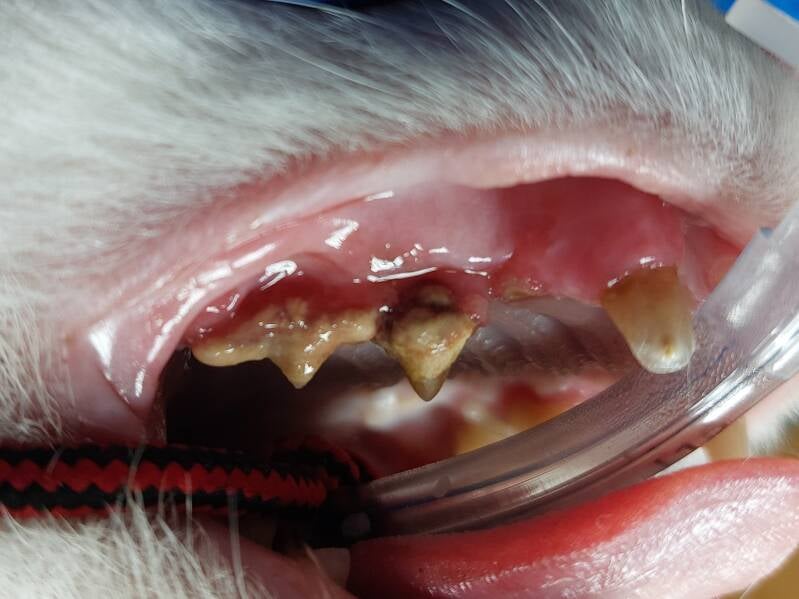
Photo by CR Zentveld - Vet2Cat
- Feline Chronic Gingivostomatitis (FCGS)
A complex, multifactorial disease causing severe and painful inflammation of the gums and mouth tissues. These cats are often extremely uncomfortable. The vast majority of affected cats are positive for a virus called Feline Calicivirus (FCV). A novel antiviral treatment is now available, and may prevent affected cats from needing full mouth extractions - contact Vet2Cat for more information.
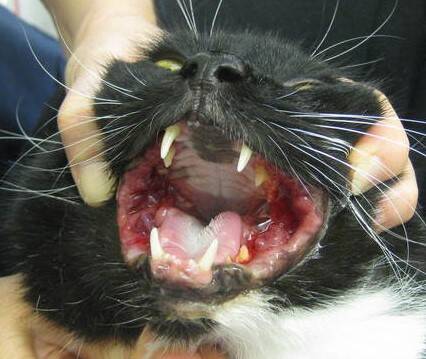
Photo by CR Zentveld - Vet2Cat
- Tooth resorption
A poorly understood condition where the tooth structure gradually breaks down, often below the gum line. These lesions can be very painful and frequently invisible without dental X-rays.

Photo by CR Zentveld - vet2Cat.
Blue arrow - type 1 resorption affecting part of the crown.
Pink arrow - type 2 resorption affecting the roots.
Other oral conditions include tooth and jaw fractures, osteomyelitis (jaw bone infection), eosinophilic granuloma complex, and cancers affecting the soft or hard tissues of the mouth.
Why dentals must be done under general anaesthetic
Dental procedures in cats must be performed under a general anaesthetic. Unfortunately, our patients won’t lie back and say “ahhh”.
A thorough feline dental at Vet2Cat always includes full-mouth dental X-rays. This is essential because a large portion of each tooth lies below the gum line and cannot be assessed visually. Dental X-rays allow us to determine which teeth can stay and which must be removed.

Image by CR Zentveld - Vet2Cat
What happens during a cat dental?
A complete dental procedure involves several important steps:
- Charting
Each tooth and the surrounding gums are carefully examined and recorded. This includes calculus levels, gingivitis, tooth mobility, fractures, gum pockets, missing teeth, and any abnormalities.

Image by CR Zentveld - Vet2Cat
- Descale and polish
Plaque and calculus are removed using an ultrasonic scaler. This often reveals problems hidden beneath the tartar. Polishing smooths the enamel surface to help slow future plaque build-up. - Dental radiographs
Dental X-rays are essential in cats. Assessing the roots can determine whether a minimally invasive crown amputation is possible or whether full surgical extraction is required. - Extractions (if needed)
Teeth are removed based on findings from the examination and X-rays. Dental nerve blocks are used to provide excellent pain relief, just like in human dentistry.
Surgical closure
Any areas where the gums are opened are meticulously sutured using extremely fine material. This is delicate, skilled work within the small confines of a cat’s mouth.
How can I keep my cat’s teeth healthy?
Tooth brushing
The most effective way to prevent dental disease is brushing or wiping your cat’s teeth. Ideally this starts in kittenhood, but older cats can learn too—with patience and consistency. Daily brushing is best. Ask Vet2Cat for advice on getting started; it could save your cat pain and you the cost of future dental procedures.
Dental diets and treats
The effectiveness of dental foods and treats varies widely. Some cats swallow even large kibble whole, gaining little benefit. Many dental treats are also high in calories with minimal dental value.
We currently recommend Royal Canin Dental or Hill’s T/D kibble.
Water additives and food supplements
Some products can help reduce plaque, but not all are well-evaluated. We currently recommend Plaqtiv+ (water additive) and PlaqueOff powder for wet food. Our recommendations may change as new evidence emerges.
Signs your cat may have dental pain
Cats are extremely good at hiding pain, but subtle signs can give them away. Contact us for a dental check if you notice:
Changes in eating
- Dropping food or chewing cautiously
- Turning the head to one side when eating
- Gulping food without chewing
- Eating less, losing weight, or eating only when alone
Behaviour changes
- Becoming grumpier or less tolerant
- Becoming unusually clingy
- Sleeping away from you
- Reduced play or reluctance to climb
Oral signs
- Red or inflamed gums
- Brown or creamy deposits on teeth
- Bad breath
- Excessive drooling

Photo by Frank Jing on Unsplash
Myth busting: common dental misconceptions
“My cat is still eating, so they can’t be in pain.”
Unfortunately, this isn’t true. Cats can be in significant pain and still eat—because the alternative is to starve.
“My cat’s teeth look clean, so they don’t need a dental.”
Many problems are hidden below the gum line. Signs can be subtle, and we would never recommend a dental unless we felt it was necessary.
“My cat has already had a dental, so they don’t need another.”
Dental disease is not always a one-off issue. Conditions like tooth resorption can affect remaining teeth, and plaque will continue to accumulate over time.
“I brush my cat’s teeth, so they don’t need a dental.”
Even with excellent home care; genetics and mouth anatomy can still lead to dental disease. Brushing helps, but it doesn’t guarantee that your cat will never develop dental disease.
“My cat is old—it’s too risky.”
Age does increase anaesthetic risk, but this is always weighed against the benefit of relieving chronic pain. We take extensive precautions, including pre-anaesthetic blood tests, intravenous fluids, and continuous monitoring by a qualified veterinary nurse.

Vet Claire & her cat Mikey - by Estelle Pitt Vet2Cat
Final words
Dental disease is one of the most common conditions we see in cats. Because they hide pain so well, regular dental checks are essential to maintaining their comfort and quality of life.
If you have any concerns about your cat’s mouth, teeth, or behaviour, please contact Vet2Cat to arrange a dental assessment. Early intervention can make a world of difference.

Add comment
Comments