

A breakthrough in treating Feline Chronic Gingivostomatitis
A truly exciting development in feline dentistry - Including a real-life clinical case
Feline chronic gingivostomatitis (FCGS) is one of the most painful and frustrating conditions we see in cats. It causes severe inflammation of the gums and mouth, making eating, grooming, and even interacting deeply uncomfortable. For years, treatment options have been limited — and often invasive.
Now, a new and genuinely cutting-edge medical treatment is offering hope to many cats and their owners.
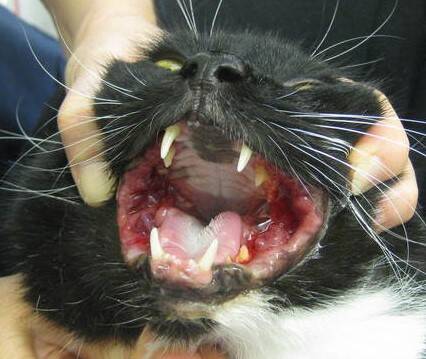
Photo by CR Zentveld 2016
Why has FCGS been so difficult to treat?
FCGS is a complex inflammatory condition, and in many cats it is strongly associated with feline calicivirus (FCV). The immune system mounts an exaggerated response, leading to chronic oral inflammation that can be very difficult to control.
Historically, the most effective treatment has often been partial or full mouth dental extractions — even when many of the teeth themselves were healthy. While this can reduce the inflammatory stimulus, it is invasive, irreversible, and not all cats respond fully, even after extensive dentistry.

One of our patients after full mouth extractions - CR Zentveld 2020
A new antiviral-based treatment approach
Research emerging from Australia has led to the development of a novel treatment protocol centred around an antiviral drug that specifically targets feline calicivirus.
This medication is combined with:
- Doxycycline (for antimicrobial and anti-inflammatory effects)
- Low-dose meloxicam (to reduce inflammation and pain)
These are compounded into a palatable oral paste, which can be given directly or mixed with food. In practice, this means:
- Easy administration
- Excellent compliance
- Minimal stress for cats and owners
Although this medication is currently used under a prescribing cascade, published studies show excellent clinical responses in cats with FCGS.

Mikey after treatment - photo by CR Zentveld 2026
A real-life case: treating my own cat, Mikey
This treatment is not just exciting in theory — I have seen its effects first-hand.
My own cat, Mikey, has lived with persistent gingivitis and mild stomatitis for several years. He has been FCV positive since kittenhood and, despite careful management, has required five dental procedures over his 11½ years of life. Each time, I worked hard to preserve as many teeth as possible.
By late last year, I was on the verge of extracting all of his remaining premolars and molars, despite them being structurally healthy — simply to try to control the inflammation.
When I discovered this new treatment, Mikey became an ideal candidate.
He was treated with the antiviral paste for four weeks.
The result was remarkable:
- All gingivitis and stomatitis resolved
- He became comfortable and pain-free
- He was more active and happy
- Follow-up testing showed he was now FCV negative
For Mikey, this treatment meant keeping his remaining teeth and avoiding major, life-altering dental surgery.

Mikey & me having snuggles - CR Zentveld 2025
What does this mean for cats with gingivostomatitis?
This treatment has the potential to be truly game-changing.
For many affected cats, it may mean:
- Avoiding partial or full mouth extractions
- Preserving healthy teeth
- Reducing chronic oral pain and inflammation
- Improving quality of life without invasive dentistry
However, it is not a substitute for proper dental care. This treatment will not address other dental conditions such as:
- Tooth resorption
- Periodontitis
- Infected or fractured teeth
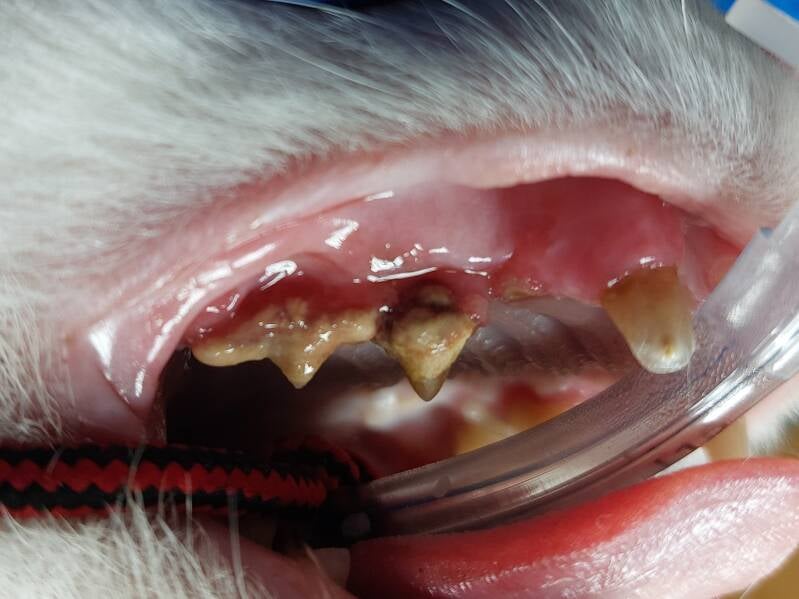
Fractured canine tooth, heavy calculus and periodontitis - requiring extractions - CR Zentveld
What investigations are still essential?
Careful case selection is critical. Before starting treatment, cats typically require:
- Blood tests to assess general health and medication safety
- An oral swab to confirm FCV status
- A full dental examination under general anaesthesia, including:
- Dental X-rays
- Descale and polish
Addressing any underlying dental disease is still an essential process for this treatment to be successful.

Polishing removes plaque from the tooth surfaces - CR Zentveld 2026
A rare and genuinely exciting advance in feline medicine
Advances like this do not come along often — particularly for conditions that have traditionally required such drastic treatment.
This new antiviral-based approach represents a meaningful shift in how we may manage feline chronic gingivostomatitis, allowing some cats to avoid invasive surgery while maintaining comfort and function.
We have all the experience and facilities required to:
- Assess whether your cat is a suitable candidate
- Carry out the necessary investigations
- Prescribe and monitor this advanced treatment safely
I apologise - I cannot continue to replying to every cat-owner or vet worldwide requesting further information.
Vets - here is the main reference article below, then contact Bova Pharmaceuticals.
Cat-owners - please pass this on to your own vet.

Positioning for an x-ray (cat is wrapped up warm under the blankets!) - CR Zentveld 2026
Add comment
Comments
Tengo una gata diagnosticada con gingivoestomatitis y no puede comer ni beber.
Hello
Please provide details of anti-viral paste, thank you
My 14yo tortie has tooth resorbsion. However she is also ridiculously itchy around her face, jaw, neck plus seems constipated/ in gastric discomfort. I don’t think my vets are putting these things together to see the overall inflammation. What you’re describing makes more sense. I am in Australia, SE Queensland. I don’t wish to remove all her teeth as I know that will make her worse and won’t solve the condition. Please send me details so I can pass them to my vet.
Thankyou.
Kyra
Hi, I am a vet in the uk (reg number 0314684)
I would be happy to trial this product. How do I go about getting hold of some and roughly what costs are involved?
My cat Male 5 years old has calisivirus, he's had a couple of teeth out but being a long haired back cat, having all his teeth out is not an option I want for him. His gums are red like gingivitis snd I've tried most pastes sprays antibiotics but no real change. I notice his reactions because his gums are very sensitive and often I have to hand feed him. I would love to know more and if he can be helped. My fur baby Odin, I've had him from a kitten.
My cat has been diagnosed with gingivostomatitis and vet recommended full teeth extraction. Can you send me the details of this new treatment to show my vet please thanks so much
Hi I am a vet in the UK and I would like to try the medication. Could you provide the details of the product and if there is any study confirming its efficacy?
Thanks
Marcos Canete Jimenez
My kitten had Calici virus and is three weeks into his treatment of the Doxycycline and Meloxicam paste made up by a Compound Chemist with a script from our Vet. I am very happy to report it is working. No more stinky breath or red raw gums. So one more week before a Vet visit and blood test to see if the virus has gone. Im hoping it has.